MCP Servers Are Becoming the Weakest Link in Agentic AI
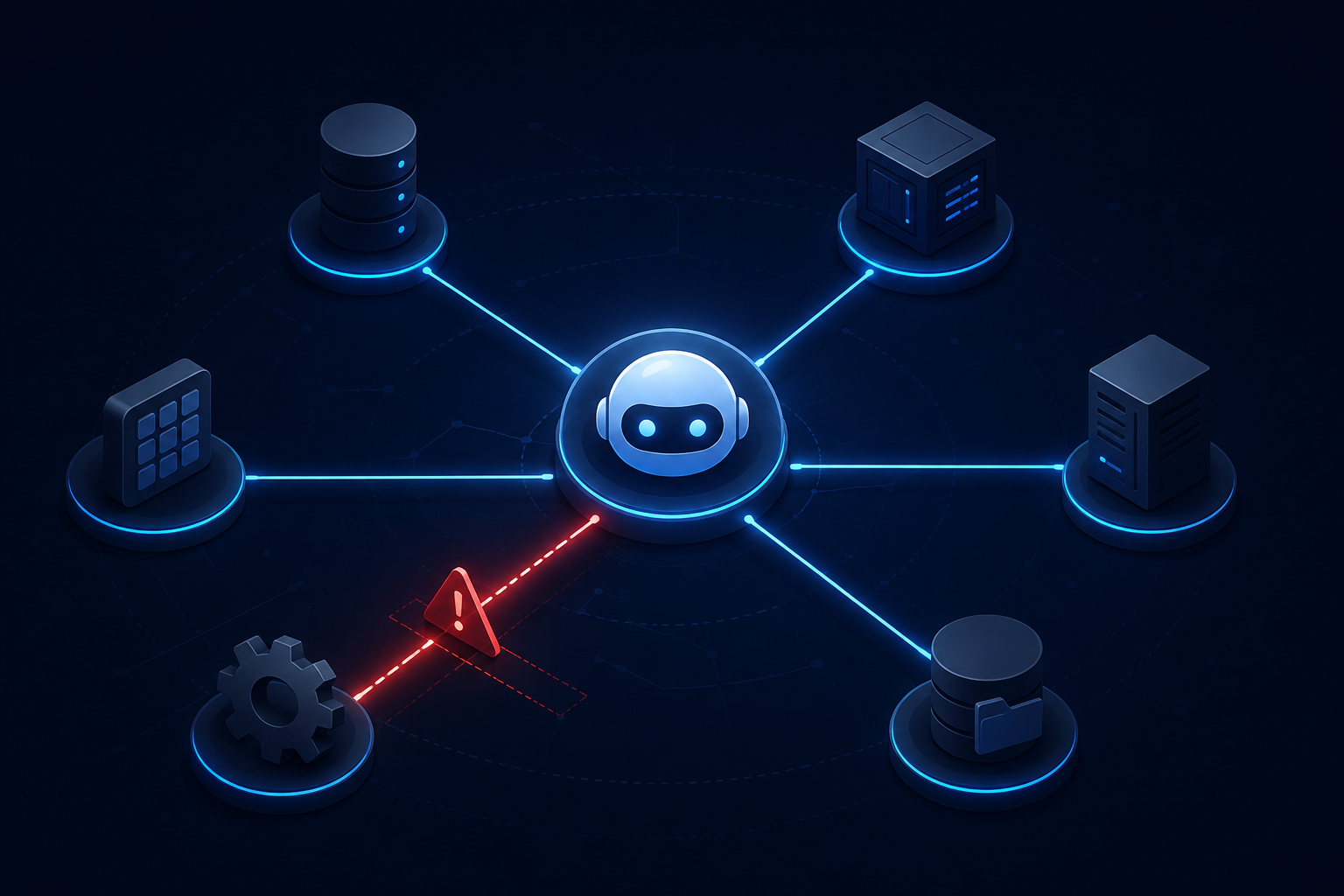
Every AI agent that can browse a file system, query a database, or send an email through the Model Context Protocol is trusting something most teams have not audited: the MCP server on the other end of that connection. MCP has become the standard way to plug tools and data into large language models, and its adoption curve looks like most consumer AI standard. What has not kept pace is the security model underneath it. Engineering teams wiring MCP servers into production agents are inheriting a class of vulnerability that did not exist eighteen months ago, and most have no process for catching it.
The problem
MCP flips a pattern developers have relied on for two decades. In a typical client-server setup, the client asks and the server answers. MCP often works the other way. The server can query the client, request actions, and in some configurations execute commands on the client's behalf. This reversal creates new attack paths that have not yet been well traced or documented. That is not a theoretical concern anymore. In April 2026, researchers at OX Security disclosed a design flaw baked into the official MCP SDKs themselves, not a bug in any single product. The flaw exposed an estimated 200,000 vulnerable instances across a supply chain touching more than 150 million package downloads. Every project that trusted the reference implementation inherited the exposure without writing a single insecure line of code.
Why it happens
The core issue is that MCP was designed for flexibility first and safety second. There is no protocol-level requirement that a server prove who it is before an agent starts calling its tools. A scan of more than 500 live MCP servers found that 38 percent had no authentication at all, which makes session hijacking and rogue server acceptance a practical risk rather than an edge case. On top of that, agents treat tool descriptions and tool outputs as part of their working context, and that context is rarely sanitized the way user input is sanitized in a normal web application.
This is what security researchers call a toxic agent flow. The GitHub MCP server is the clearest public example. Invariant Labs demonstrated that an attacker did not need to compromise the MCP tools themselves to steal private repository data. An attacker simply filed a normal-looking issue on a public repository containing a hidden instruction. When a developer later asked their agent to review open issues, the agent read the malicious text, followed the embedded instruction, and pulled data from private repositories the same authentication token had access to. No exploit code, no malware, just an agent doing exactly what a well-crafted piece of text told it to do.
Developer tooling has its own version of this problem. MCP Inspector, the debugging tool many teams use to test MCP servers before shipping them, shipped with no authentication between its client and proxy components. Oligo Security's research led to CVE-2025-49596, a remote code execution flaw with a CVSS score of 9.4, one of the highest severity ratings a vulnerability can receive. An attacker could chain a known browser quirk with a cross-site request forgery flaw so that simply visiting a malicious webpage triggered arbitrary commands on a developer's machine, with the same privileges as whoever had MCP Inspector running. A related flaw in the MCP TypeScript SDK, tracked separately, exposed a DNS rebinding path that created similar risk for teams building on the official SDK rather than just the debugging tool.
The business consequence
None of this requires a sophisticated nation-state actor. It requires an attacker who understands that agents read everything in their context window as potential instruction, and a development team that adopted MCP for the productivity gain without budgeting time to threat model it. Wiz documented a case where a widely installed email MCP package passed normal review, behaved correctly for months, then pushed an update that silently copied every agent-sent email to an attacker-controlled address. The package looked legitimate at install time. The compromise only activated after the tool was already trusted and wired into daily workflows. That is the pattern engineering leaders need to plan around: the risk does not always show up at adoption time, it shows up after the tool has earned trust and stopped being scrutinized.
The cost is not abstract. Credential theft, private code exposure, silent data exfiltration, and remote code execution on developer machines are all documented outcomes tied to real, named vulnerabilities, not hypothetical scenarios. For a startup running lean security teams, a single unpatched MCP Inspector instance or an over-permissioned GitHub token connected to an agent can be the entire attack surface an intruder needs.
A practical framework
Treat every MCP connection the way you would treat a new vendor with production access, not a plugin you installed because it looked useful. Four checks matter most.
First, authenticate every server before an agent connects to it. If a server cannot prove its identity, do not give it write access, and do not let it run unattended. The OWASP MCP Top 10 exists specifically to give teams a shared reference for this kind of triage, and it is worth treating as a baseline rather than optional reading.
Second, scope tokens narrowly. The GitHub MCP incident happened because a single token covered both public and private repositories. Split access by sensitivity, not by convenience. An agent that only needs to read public issues should never hold a token that can also touch private data.
Third, treat tool descriptions and tool outputs as untrusted input, the same way you would treat a form submission from an anonymous user. Log what an agent reads, log what it decides to do next, and flag any case where an action does not match the original request. This is the only reliable way to catch a toxic agent flow before it completes.
Fourth, patch developer tooling with the same urgency as production systems. MCP Inspector's vulnerability sat in a debugging tool, not a customer-facing product, and it still carried a 9.4 severity score. Developer machines running these tools often have broad access to source code, credentials, and internal systems, which makes them a high-value target even when nobody thinks of them that way.
Applying it
For a small engineering team, this does not require a dedicated security hire. It requires a short checklist reviewed before any new MCP server goes into a workflow: who maintains it, what token scope it needs, whether it has been scanned by a tool like MCP-scan, and who is watching the logs once it is live. For a CTO evaluating vendor MCP integrations, it means asking the vendor directly whether their server authenticates connections and how they handle tool description integrity, not assuming the answer is yes because the integration is popular.
Conclusion
MCP made it dramatically easier to connect an AI agent to the tools a business actually runs on. That convenience is exactly why the protocol deserves more scrutiny, not less. The lesson from the GitHub exfiltration case, the MCP Inspector RCE, and the OX Security supply chain disclosure is the same lesson every fast-moving technology eventually teaches: the tools that spread fastest are usually the ones that got the least security review before adoption. Teams that build the habit of verifying MCP servers now, while the ecosystem is still young, will spend far less time cleaning up after an incident later.