Technical Due Diligence When an AI Assistant Wrote Part of Your Codebase
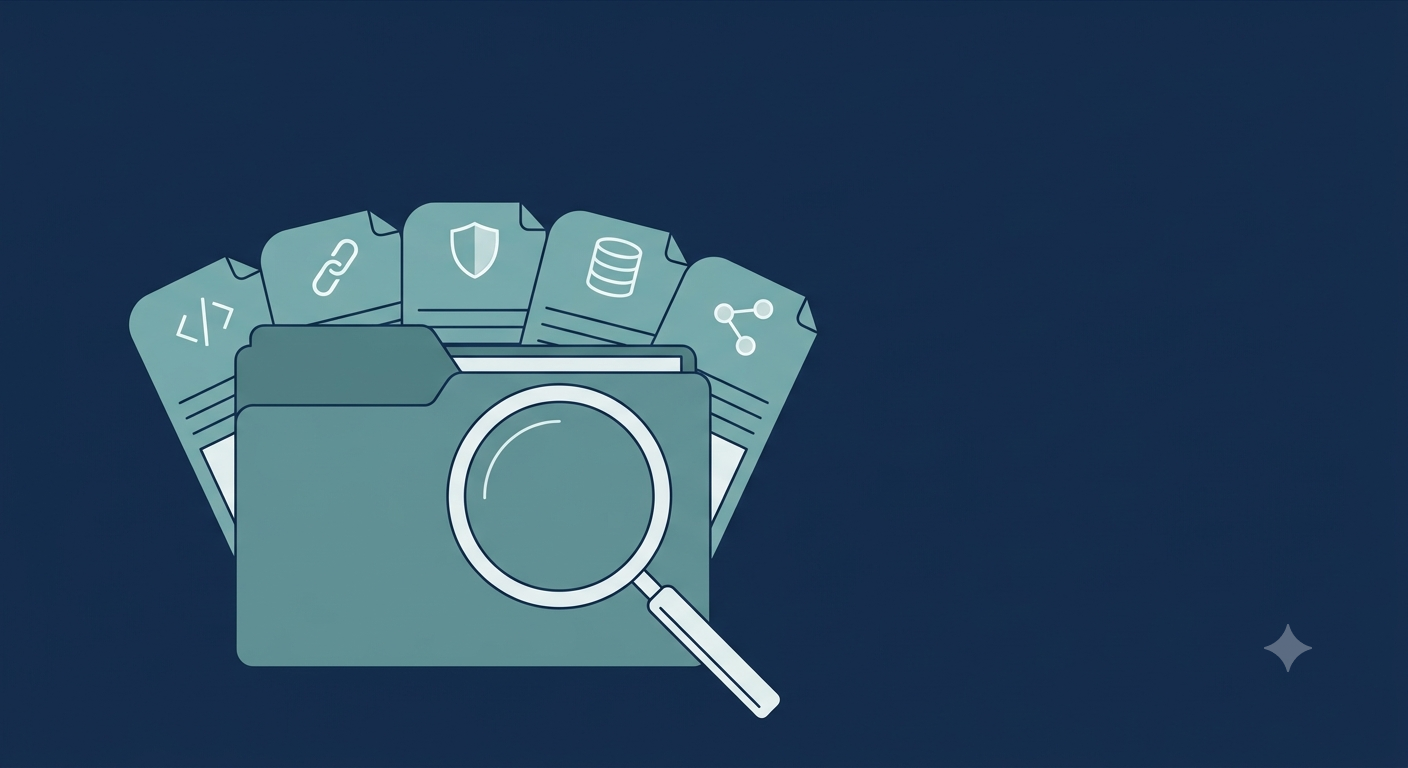
A Series A conversation is going well, and then the investor’s technical reviewer sends a request list. Item four asks for every open-source component in the product with its license. Item seven asks which parts of the codebase were written with AI coding tools, and under what terms. Item nine asks what happens to the product if the main model provider raises prices or retires the model you depend on. The CTO has rough answers to all three. None of them exist in a document.
That gap between knowing and being able to show is where technical due diligence now slows rounds down. This article covers what reviewers check when AI tools helped write the code, the five requests that come up most often, and a one-day test for judging whether your answers are ready. It is written for founders and CTOs preparing for a seed or Series A raise.
What technical due diligence reviews
Technical due diligence is the review an investor runs on your product and engineering organization before committing money. It usually covers architecture, code quality, security, ownership of intellectual property, and the people who maintain the system. Depth varies by stage and by investor. Some bring a technical partner who reads representative code and interviews your engineers. Others hire an outside reviewer and ask for documents through a data room.
Reviewers are rarely looking for perfect technology. They are looking for a team that knows where its risks are and can show it.
What changes when AI tools wrote part of the code
The review areas stay the same. The evidence for three of them gets harder to produce.
Ownership. Law firms advising on deals describe ownership of AI-generated code as unsettled and dependent on jurisdiction, and say investors are now asking how central proprietary source code is to the business. One UK firm notes that work generated without enough human creative input may not get full copyright protection, and that the contract behind each AI tool changes what you can claim. Several other jurisdictions, the US among them, have so far tied copyright to human authorship. Treat this as a question for your own counsel.
License exposure. A reviewer will ask whether the code generators you used were trained on or incorporate open-source code, which license terms apply to what they produced, and whether any of it carries copyleft conditions. They may also ask whether that code could be replaced with something written another way.
Comprehension. If the reviewer interviews an engineer and asks how a payment module handles a failed webhook, “the assistant wrote that part” is a finding. This one is my observation from reviews, and it tends to matter more than any single line of code.
The five requests, and what answers each
1. Which AI tools touched the code, and under what terms
The evidence is an AI tool register: each tool, the plan tier, the date adopted, and the terms that cover outputs. Add signed IP assignments from employees and contractors, and a short written policy on AI use. Commit history that shows human review and modification supports the policy better than the policy does alone.
2. What is in the dependency tree
Open-source license obligations can lead to disputes and expensive re-engineering when they are missed, and most teams produce a software bill of materials (SBOM) with a software composition analysis tool. Run it, then record a decision for each copyleft license it surfaces. AI assistants also recommend packages that do not exist, so the review should confirm that every dependency is real and intended (the slopsquatting post covers how that attack works).
3. What the security evidence looks like
One reviewer checklist for AI-generated code lists exposed API keys in client-side code, weak authorization, unsecured endpoints, and unverified webhooks. Bring scan reports, a secrets scan, and tests that prove users cannot read each other’s data. Name one person who owns the results, which is the subject of who owns AI security without a security team.
4. What data flows where
Draw the path customer data takes: prompts, retrieval stores, logs, and the provider’s servers. Next to it, put the provider’s retention and training settings, the customer contract language that permits the flow, and the deletion path if a customer leaves. Reviewers ask what happens to user data if you shut down, and this is the document that answers it.
5. What happens when the model provider changes
Investors ask about the impact of a provider outage or price increase, and whether there is evidence of a fallback. The strongest answer is test results: your evaluation suite run against a second model, with notes on what broke. The model deprecation plan and the pricing analysis cover the two ways this dependency bites.
The one-day test
For each request, assign an artifact, an owner, and a refresh trigger. Then apply one test: could someone other than the CTO produce it within a working day?
| Request | Artifact | Owner | Refresh |
|---|---|---|---|
| Tool and ownership terms | AI tool register, IP assignments | CTO and counsel | Each new tool, each hire |
| Dependencies and licenses | SBOM, license decision log | Engineering lead | Every release |
| Security | Scan reports, authorization tests | Named security owner | Monthly |
| Data rights | Data flow map, provider settings | CTO and counsel | Each new data source |
| Provider dependency | Second-model evaluation results | Product engineering lead | Each model change |
An answer that fails the test is still useful information. It tells you where the week of work is.
Using it before a raise
Give yourself three weeks before the first investor call. In week one, build the inventories: tools, dependencies, data flows. In week two, make the decisions the inventories force, such as replacing a copyleft component or turning off provider-side training on customer data. In week three, put everything in one folder and run a dry session with an advisor who plays the reviewer and asks the awkward questions.
Expect gaps. Disclose them with a plan and a date. A reviewer who finds a known risk with an owner and a timeline has a smaller problem than one who finds an unknown risk during the interview.
What the folder is really made of
The evidence pack is a byproduct of habits. Teams that record tool adoption when it happens, log dependency decisions at each release, and keep one evaluation suite current spend a few days on diligence. Teams that rebuild this history from memory spend weeks, and the rebuilt version is always less convincing than the one kept as they went. Start the records at the next release, and the next raise gets shorter.
This article is general information for founders and not legal advice. Take IP and licensing questions to qualified counsel in your jurisdiction.
About the author
- Startup Mentor passionate about helping founders build, grow, and scale successful businesses. I share practical insights on startup strategy, execution, leadership, decision making, business growth, and founder mindset. My goal is to help entrepreneurs avoid common pitfalls, make informed decisions, and build sustainable companies through actionable advice and real-world experience. Whether you're validating an idea, scaling your startup, or leading a growing team, you'll find practical frameworks and lessons to help you move forward with confidence.
Comments
Join the discussionItem four is a good example. A license list is cheap to answer if someone kept track and very expensive to reconstruct in the middle of a raise.
For startups using AI heavily I would add two things to prepare well before diligence: a short record of which parts of the system were generated and how they were reviewed, and tests around the flows an investor will ask about first, such as billing, authentication and data access. Reviewers tend to worry less that AI wrote code than that nobody can explain or verify it.
Founders often try to fix all of this at once right before a round. It goes better as a few small, clearly scoped pieces of work done earlier, each with its own definition of done, like a dependency and license inventory or a tested payments module. Which item on the request list do founders find hardest to answer?